


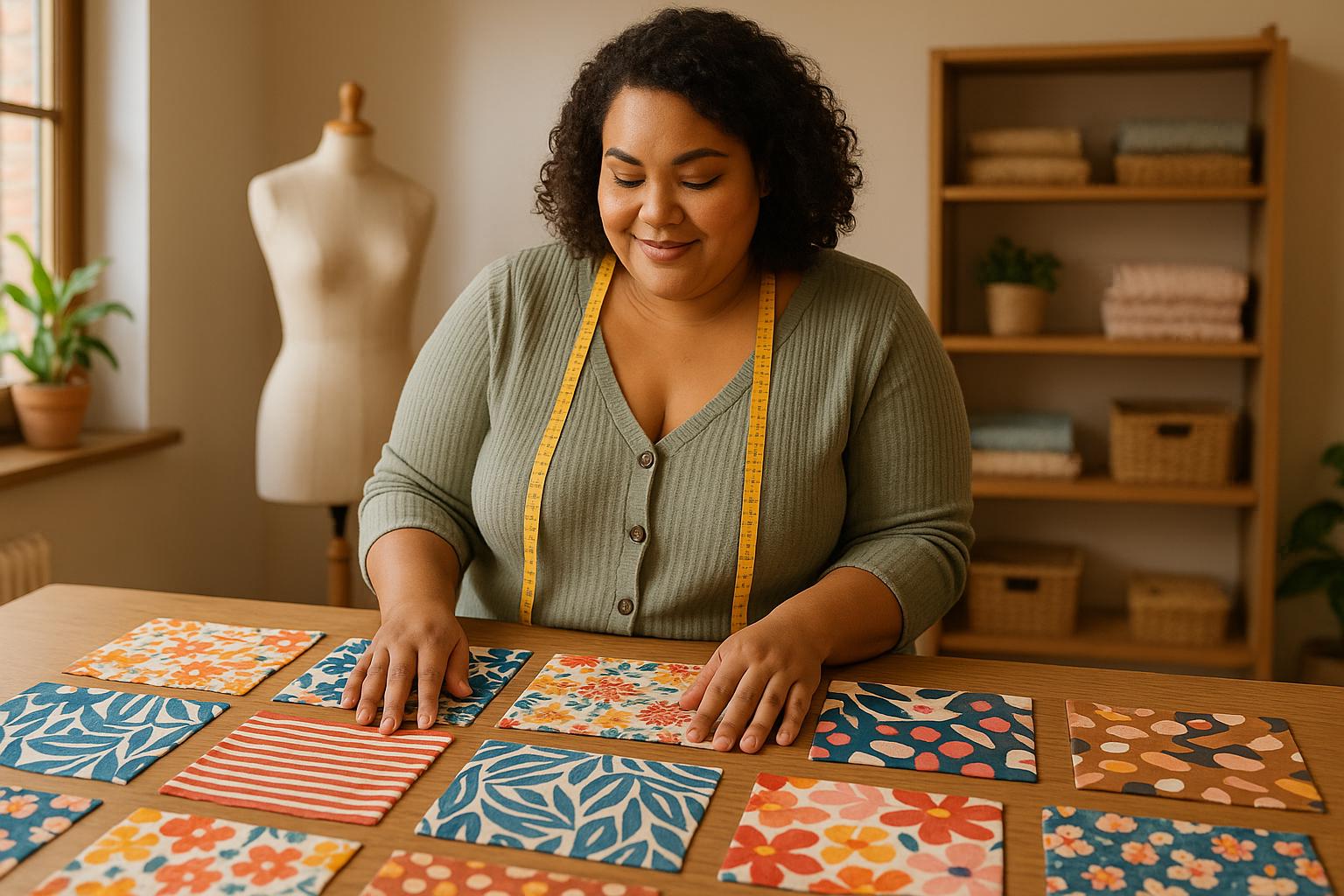
How to Pick Patterns for Flattering Size-Inclusive Looks
When it comes to choosing patterns that suit all body types, the goal is to highlight your best features while ensuring comfort and confidence. Patterns can shape how we perceive proportions, making them a powerful tool in styling. Here's the essence of how to pick the right patterns:
- Vertical patterns make you look taller by elongating your frame.
- Horizontal patterns add width, balancing proportions like broader shoulders or narrower hips.
- Diagonal patterns create movement and define curves, often flattering for the waist.
- Pattern size matters: Large prints stand out and suit taller frames, while smaller prints are subtle and versatile.
- Colour and contrast influence focus: High-contrast patterns grab attention, while monochromatic ones offer a softer look.
In India’s climate, breathable fabrics like cotton and modal work best with patterns. Whether it’s florals, stripes, or geometric prints, the choice of fabric and design can help you stay stylish and comfortable. For everyday wear, pair bold patterns with solid colours, or try coordinated sets for effortless style. Seasonal choices, like darker patterns for monsoons or earthy tones for autumn, can also enhance your wardrobe.
The key is experimenting with patterns that make you feel confident and comfortable, reflecting your personality and lifestyle.
Pattern Selection Basics
Understanding patterns is like learning the visual language of style. Each design element tells a story about your silhouette, and knowing these basics can help you highlight your natural shape effectively.
How Visual Proportions Work
Patterns play a big role in shaping how we perceive proportions. The eye naturally follows lines and shapes, which can make areas appear larger, smaller, longer, or wider based on the pattern's direction and placement.
- Vertical patterns guide the eye up and down, creating an illusion of height and length. Think pinstripes or vertical floral designs - they elongate the torso and add a sense of height.
- Horizontal patterns move the eye side to side, which can widen the appearance of certain areas. For instance, horizontal stripes across the shoulders can make them seem broader, naturally making the waist appear smaller.
- Diagonal patterns bring energy and movement. They break up the body's natural lines and can create an hourglass effect. Diagonal prints across the torso often draw attention inward, defining the waistline.
Strategically using pattern direction can help you draw attention to the features you want to highlight. For example, if you want to emphasise your waist, opt for patterns that converge at the midsection. To make your legs look longer, choose vertical patterns for the lower half.
Next, let's explore how the size of a pattern influences its overall effect.
Pattern Size and Its Impact
The size of a pattern can dramatically affect how it interacts with your body's proportions. Larger patterns tend to stand out, making areas more noticeable, while smaller patterns are subtler, adding texture without overwhelming.
- Large-scale patterns suit taller frames, but with careful placement, they can work for shorter individuals too. For instance, an oversized floral print looks striking on a taller person but might dominate a more petite figure.
- Medium-scale patterns are versatile and work across a variety of body types. They’re bold enough to add interest without overpowering. Think of moderate-sized paisley prints in Indian wear or geometric patterns that strike a balance between subtle and statement-making.
- Small-scale patterns create understated elegance. Tiny florals, mini polka dots, or delicate geometric designs add sophistication without altering proportions significantly. These patterns are ideal for coordinated outfits, like matching sets from brands such as FflirtyGo, where subtlety meets comfort and style.
The harmony between your body frame and the pattern size is key. For instance, a petite person might find medium patterns look larger on them, while someone with a larger frame might feel small patterns appear too busy or insignificant.
Finally, let’s take a closer look at how colour and contrast refine a pattern’s effect.
Colour and Contrast Effects
Colour and contrast play a major role in how patterns are perceived. High contrast makes a bold statement, while low contrast offers a softer, more understated look.
- High contrast patterns, like black-and-white stripes or bright florals on dark backgrounds, grab attention and create dramatic effects. These patterns work well when placed on areas you want to highlight, but they might not be ideal for features you’d prefer to minimise.
- Monochromatic patterns, which use varying shades of the same colour, add depth without being too bold. For example, a navy-on-navy geometric print or floral designs in shades of green can create a polished, elegant look.
- Warm colours - reds, oranges, and yellows - tend to draw attention and make areas appear more prominent. Cool colours - blues, greens, and purples - have the opposite effect, creating a slimming and calming impression.
The background colour also impacts the pattern’s visual weight. Light backgrounds make patterns stand out more, while dark backgrounds help patterns blend in subtly. For instance, a white shirt with small blue flowers will look entirely different from a navy shirt with the same floral design because the background changes the pattern's prominence.
How to Choose Flattering Patterns
The right patterns can highlight your best features and enhance your silhouette. Let’s dive into how different patterns can work for you.
Stripes: Direction and Placement
Stripes can dramatically influence how your figure appears, depending on their direction and placement.
- Vertical stripes create the illusion of length, drawing the eye upward and making you look taller. For example, a kurta with vertical stripes can elongate your frame effortlessly.
- Horizontal stripes add width to specific areas. For instance, stripes across the bust can enhance a smaller chest, while horizontal stripes at the hips can balance broader shoulders. Use them to add volume where needed.
- Diagonal stripes break up your natural body lines and add a sense of movement. These are particularly flattering on wrap-style tops or dresses, as they complement the garment's flow.
Thin stripes offer a subtle touch, while bold stripes make a statement. For relaxed, everyday wear like FflirtyGo’s coordinated sets, medium-width stripes strike the perfect balance between comfort and style.
Next, let’s look at floral prints, which add softness and charm.
Florals: Small vs Large Prints
Floral patterns can vary widely in their effect, depending on their size and density.
- Small floral prints (no larger than your fist) are perfect for petite frames. They add elegance to fitted tops and loungewear, especially when paired with muted colours [3][6].
- Large floral prints work well for taller or fuller figures. These bold patterns make a statement and can highlight specific areas of the body. Adding a belt at the waist can help break up the pattern and define your shape [3][5][6].
- Print density matters too. Densely packed florals can create a slimming effect by keeping the eye moving, while sparser prints draw attention to specific areas [2][4].
- Contrast levels in floral designs also influence their impact. High-contrast florals are more noticeable and suit larger frames, while low-contrast prints offer a softer, more versatile look [2][4].
Now, let’s explore the modern appeal of geometric patterns.
Geometric Patterns and Balance
Geometric designs like polka dots, checks, and abstract shapes bring structure and style to your wardrobe.
- Polka dots work much like florals. Smaller dots add texture without overwhelming, while larger dots make a bold statement. Closely spaced dots are subtle, while widely spaced ones create a striking effect.
- Check patterns - like gingham or plaid - need to be scaled to your frame. Smaller checks provide a timeless look, while larger checks can be tricky but flattering when chosen thoughtfully.
- Abstract geometric prints such as chevrons or diamonds offer flexibility. These patterns can enhance your natural curves or soften certain areas, depending on their placement. For example, designs that draw the eye to the waist can be especially flattering.
For casual outfits like joggers or easy-wear pants, choose patterns that maintain their structure whether you’re sitting, standing, or moving.
Finally, let’s talk about how placement prints and colour-blocking can fine-tune your look.
Placement Prints and Colour-Blocking
Strategic use of placement prints and colour-blocking can highlight your best features.
- Placement prints are patterns positioned in specific areas of a garment. A floral design at the neckline, for example, draws the eye upward, while a patterned hem can balance proportions.
- Colour-blocking with patterns combines patterned sections with solid colours to create visual interest. Pairing a patterned top with solid bottoms gives the eye a break while maintaining balance.
- Asymmetrical pattern placement adds a modern twist. Think diagonal stripes starting at one shoulder or a floral print that transitions from dense to sparse. These designs add movement and can highlight your natural shape.
When choosing placement prints, consider your lifestyle and comfort. These patterns work well for everyday outfits, especially when crafted from durable fabrics that hold up to frequent wear and washing. Focus on quality materials to ensure your look stays polished over time.
Matching Patterns with Fabrics and Outfits
Choosing the right fabric for a pattern can make all the difference, blending comfort with style. Understanding how materials interact with designs ensures your outfits look great and feel even better.
Best Fabrics for Daily Comfort
Cotton and cotton blends are perfect for patterned casual wear, especially in India's warm climate. These fabrics are breathable, making them ideal for humid weather, and they hold patterns like geometric prints and stripes well, even after repeated washes.
Modal and bamboo blends are an excellent choice for floral patterns. Their soft texture and slight sheen enhance the richness of botanical prints without overpowering them. These fabrics also wick away moisture, making them a go-to option for loungewear and sleepwear.
Jersey knits are great for fitted outfits with patterns. Thanks to their stretch and recovery, they keep patterns intact during movement, making them ideal for activewear like joggers or track pants. However, avoid very small patterns, as they can blur on this fabric.
Linen and linen blends pair beautifully with bold, larger patterns. The natural texture of linen adds depth to geometric and abstract designs. While linen wrinkles easily, these creases can create unique shadow effects, enhancing the pattern over the course of the day.
Next, let’s explore how fabric drape influences the way patterns appear.
Pattern Size and Fabric Drape
Fabric drape plays a crucial role in how patterns come to life. Flowing fabrics like rayon or viscose are perfect for oversized florals or bold geometric prints. Their natural movement ensures that large patterns don't feel stiff or overwhelming. On the other hand, the weight of the fabric also impacts how patterns stand out.
Structured fabrics like cotton poplin and twill are ideal for smaller, intricate patterns. These materials hold their shape well, keeping details like mini florals or thin stripes crisp and sharp. Their stability ensures that the design remains visually striking throughout the day.
Knit fabrics, however, demand careful pattern selection. Medium-sized designs work best, as they balance well with the fabric's texture and stretch. Avoid fine details, as the natural elasticity of knits can distort lines and make them appear unclear.
When choosing fabrics, consider your lifestyle. Lightweight options work well for indoor lounging, while heavier ones are better suited for outdoor activities.
Patterns for Indian Climate and Lifestyle
Matching fabrics and patterns isn't just about style - it's also about practicality, especially in India's diverse climates. Thoughtful choices can keep you comfortable while looking polished.
In humid regions, opt for moisture-wicking fabrics with darker backgrounds to hide sweat stains.
In hot, dry areas, light-coloured patterns on breathable fabrics are a smart choice. Geometric designs in whites, creams, or pastels reflect heat while maintaining a chic look. Avoid synthetic fabrics with busy patterns in these conditions, as they can trap heat and lead to discomfort.
During the monsoon season, quick-drying fabrics are essential. Polyester-cotton blends are a reliable option, as they hold patterns well and dry faster than pure cotton. Abstract or organic patterns work particularly well during this season, as they handle slight wrinkling better than rigid geometric designs.
Look for pre-shrunk and colourfast fabrics to maintain pattern integrity through frequent washing. Screen-printed patterns are durable, while digital prints require gentler care. Darker patterns can hide stains, and busy prints can mask minor imperfections that come with daily wear.
Finally, keep cultural considerations in mind when choosing patterns for various occasions. Traditional motifs are perfect for family gatherings, while sleek geometric designs are great for professional casual settings. Brands like FflirtyGo offer coordinated sets that combine comfort with versatile patterns, making it easy to transition from home to social events seamlessly.
Daily Styling Tips with Patterns
Building on the fabric and pattern pairing tips shared earlier, here are some practical ways to incorporate patterns into your daily wardrobe. Adding patterns to your outfits doesn’t have to be overwhelming. The trick is to pair bold designs with simpler elements, creating looks that are both stylish and comfortable - perfect for India’s varied lifestyle and climate.
Mixing Patterns with Solid Colours
A simple way to work patterns into your wardrobe is by balancing them with solid colours. Start by making one patterned piece the highlight of your outfit - like a floral kurta or a top with geometric prints - and pair it with solid-coloured bottoms. Neutral shades such as navy, black, or khaki are versatile options for trousers or skirts, while solid track pants can give a more casual vibe.
For a polished look, match your solid-coloured piece to one of the hues in your patterned item. This creates a harmonious outfit that looks thoughtfully put together.
During the monsoon, darker solid bottoms are especially practical. They not only hide watermarks and stains but also balance the cheerful tones of patterned tops. Block prints or deeper shades like indigo, rust, or olive are great choices for this season, offering both functionality and style.
Coordinated Sets for Easy Style
Coordinated sets are a fuss-free way to look put-together. Short sets with matching or complementary patterns work well in India’s warm climate. These sets often feature a shared colour palette, with slight variations in pattern size or style, adding visual interest without overwhelming the outfit.
For busy days, coordinated sets are a lifesaver. They’re polished enough for video calls yet comfortable enough for lounging. Brands like FflirtyGo offer stylish, size-inclusive options that transition seamlessly from work to relaxation. To add depth, you can mix textures within the set - for instance, pairing a smooth cotton top with textured shorts in the same pattern.
Festive occasions call for coordinated sets with traditional motifs, which can be elevated with jewellery and other accessories. In cooler months, layer a patterned kurta and palazzo set with a solid shrug or a light jacket for a cosy yet chic look.
Choosing Patterns by Season
India’s varied climate means your pattern choices can reflect the seasons, blending practicality with style.
Summer and Spring:
Opt for breathable fabrics like cotton with light, airy patterns. Vibrant florals, pastels, and block prints are great options, offering a blend of traditional charm and comfort.
"Light fabrics + easy fits + mood-lifting prints = smart monsoon dressing" - Sanghamitra, Founder and CEO, Nilam India [7]
Monsoon:
During the rainy season, bold patterns in darker shades are your best bet. They minimise visible watermarks and stains. Synthetic fabrics with quick-drying properties are ideal for the humid weather. Steer clear of pastels and go for mid-length or cropped patterns to avoid splashes.
Autumn:
As the weather cools, earthy tones and subtle patterns take centre stage. Browns, oranges, and deep greens mirror the season’s palette. Geometric patterns work well during this time, especially when paired with light layers like shrugs or cardigans. These combinations make for smooth seasonal transitions.
Winter:
In winter, richer colours and heavier prints on luxe fabrics like velvet or silk come into play. Embroidery and embellishments add a festive touch. Layering is key - pair a patterned kurta with an embroidered jacket or wear patterned thermals under solid outerwear for a striking look that also keeps you warm.
Lastly, always factor in your regional climate when choosing seasonal patterns. Coastal areas may call for lighter fabrics even in winter, while mountainous regions might require heavier, layered options. The goal is to select patterns that not only suit the weather but also align with local style preferences.
sbb-itb-5b5d6ba
Conclusion: Pattern Selection Made Simple
Choosing the right patterns can transform your look by balancing elements like scale, direction, and contrast. Whether it's vertical stripes to create a lengthening effect, delicate florals for adaptability, or bold geometric designs to add a touch of drama, the right pattern can elevate both your comfort and confidence.
True size-inclusive fashion goes beyond merely resizing patterns. It’s about creating designs that complement a variety of body shapes and proportions. Brands that test their patterns on real individuals across different sizes tend to deliver clothing that flatters a wider range of people, ensuring that everyone feels their best in what they wear[1].
Style is a blend of comfort, confidence, and individuality. Your clothes should feel pleasant, allow for ease of movement, and reflect your unique personality. In India’s diverse climate, this often means opting for breathable fabrics like cotton paired with patterns that suit both the weather and your daily routine.
If you're new to experimenting with patterns, start small. Try adding printed accents to your wardrobe by pairing patterned pieces with solid colours. Brands like FflirtyGo simplify this process by offering coordinated sets and comfortable options tailored for the Indian climate and body diversity. These ideas align with the earlier tips shared about fabric choices and seasonal styling.
Ultimately, pattern selection is a deeply personal choice - what works wonders for one person might not suit another. Instead of sticking to rigid guidelines, focus on how a print makes you feel. When you find patterns that make you feel both stylish and at ease, you've unlocked your perfect formula.
Celebrate your individuality with patterns that bring out your confidence and comfort. With these insights as your guide, you’re all set to explore the world of patterns and create looks that are uniquely yours.
FAQs
How do I choose patterns that flatter my body type?
Understanding how patterns interact with your body shape can make a big difference in how your outfits look and feel. For instance, vertical stripes are great for creating a taller, more elongated appearance, while horizontal stripes can visually broaden your frame. Bold prints like florals can add a splash of personality, though smaller prints often complement petite frames better. Meanwhile, geometric patterns - think checks or polka dots - can bring a sense of balance and structure to your look.
When choosing size-inclusive clothing, it’s crucial to focus on pieces that match your measurements, particularly around your bust, waist, and hips. Brands such as FflirtyGo offer practical yet stylish options like coordinated short sets and comfy pants, designed to suit a range of body types. Combining the right pattern with a proper fit can elevate your style and boost your confidence.
How can I use patterns in my professional wardrobe without making it look too bold or busy?
Adding Patterns to Your Professional Wardrobe
Want to bring patterns into your work attire without going overboard? Start by balancing the scale of patterns. Pair a bold, large print with a more subtle, smaller one to create a look that feels well-proportioned and visually pleasing.
Another tip is to stick to a consistent or complementary colour palette. This helps tie everything together, making your outfit look polished and put-together.
If you're working with vibrant patterns, you can tone them down by layering them with neutral or solid-coloured pieces. For instance, a floral blouse works beautifully under a solid blazer, or you could wear a geometric-patterned skirt with a simple, plain top. This way, you can keep things professional while still showing off a bit of your personality and style.
How do fabrics affect the comfort and look of patterned clothing in India's climate?
The Role of Fabrics in Patterned Clothing
Fabrics are a game-changer when it comes to how comfortable and stylish patterned clothing feels, especially in India's varied climate. Natural fabrics like cotton, linen, and muslin are a go-to choice for many. Why? They're breathable, lightweight, and great at absorbing moisture, making them ideal for those sweltering hot and humid days. Plus, these fabrics let patterns flow and drape beautifully, adding to their overall charm.
On the other hand, synthetic fabrics like polyester and nylon can be a bit tricky. They tend to trap heat and moisture, which can make wearing them uncomfortable, particularly in the summer. They also have a tendency to cling to the body, which might not always work well with the fit and look of patterned clothing. Choosing natural, breathable fabrics not only keeps you comfortable but also ensures your patterned outfits look effortlessly stylish, no matter how high the mercury rises.
Related Blog Posts
Related Posts

10 Affordable Matching Pajama Sets for Families

Top 10 Plus-Size Loungewear Brands in India

How to Build a Tween Capsule Wardrobe

Shein Plus Size vs Indian Plus Size Brands: Complete 2025 Comparison

Plus Size Casual Wear Trends Taking Over Indian Fashion in 2025

Where to Find Trendy Plus Size Clothing in India: XXL to 9XL Complete Guide
